


The creation of a stone portrait is one of the most complex and demanding tasks in sculpture. Especially when it takes the form of a monument. Such works carry more than artistic value. They convey memory, identity, and a lasting message to the community.
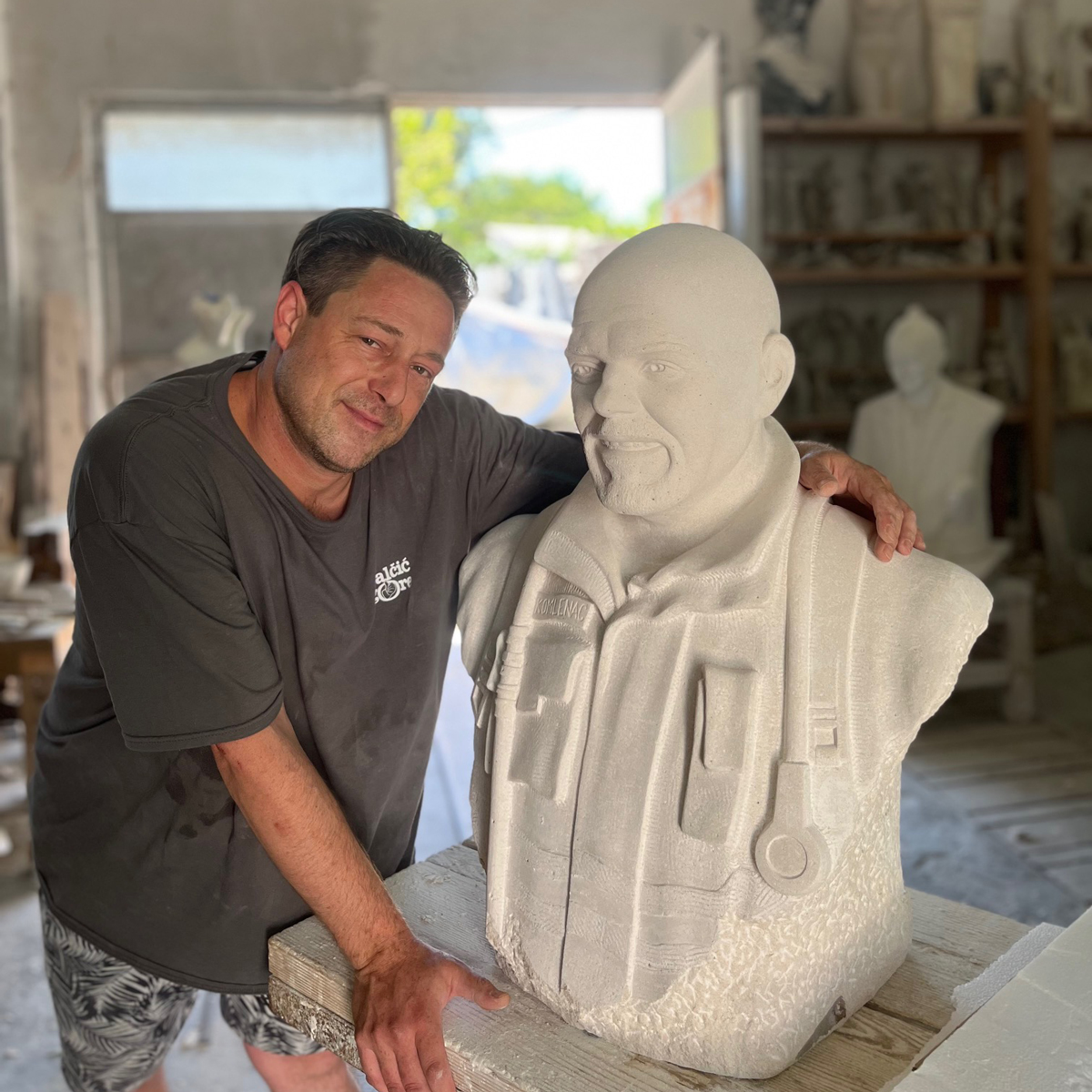
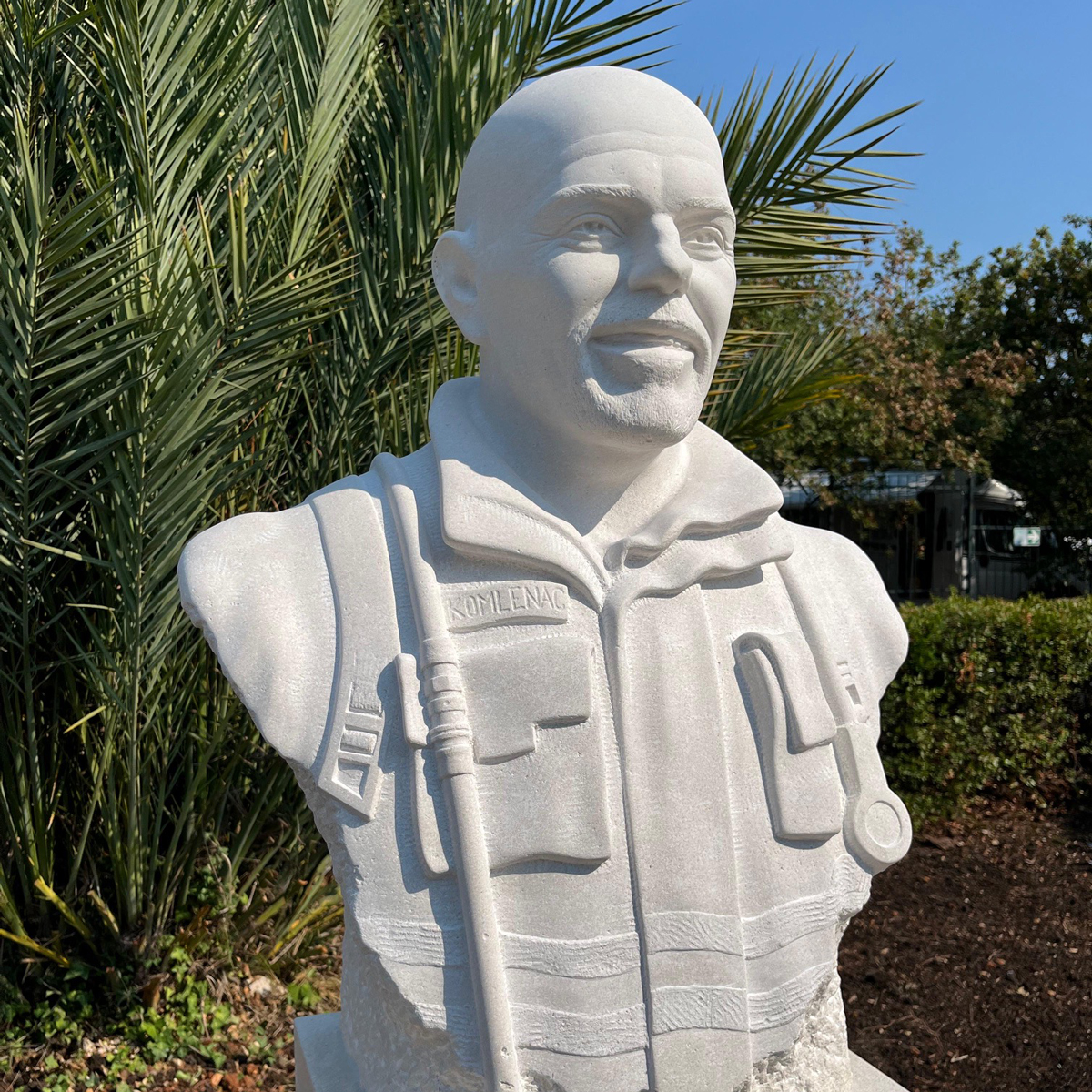
Our sculptor Lovre Jakšić was commissioned by the City of Dubrovnik to create a portrait of Goran Komlenac. The work takes the form of a stone portrait, conceived as a stone bust dedicated to a fallen firefighter. The monument was installed in his place of birth. As a sign of respect, gratitude, and enduring remembrance.
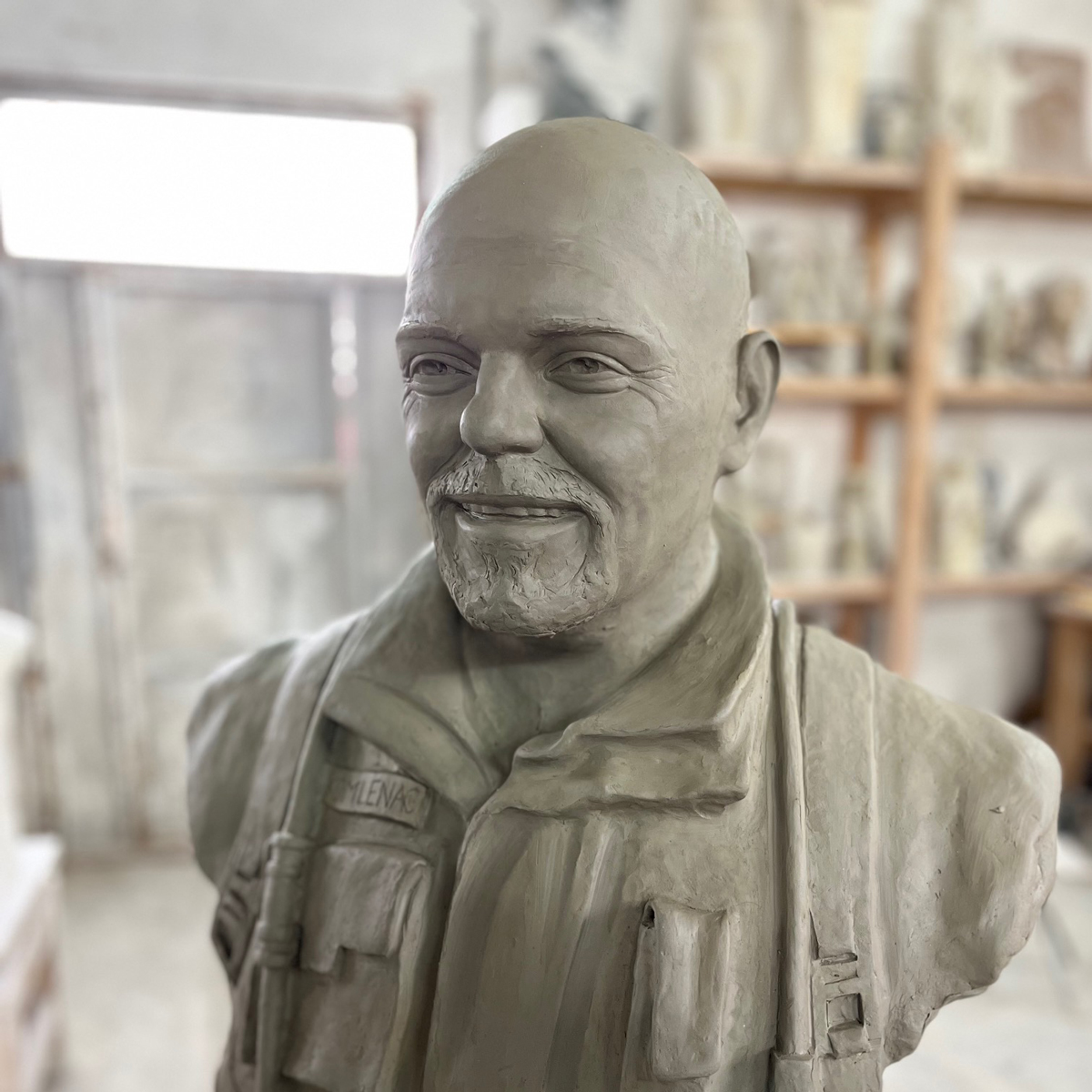
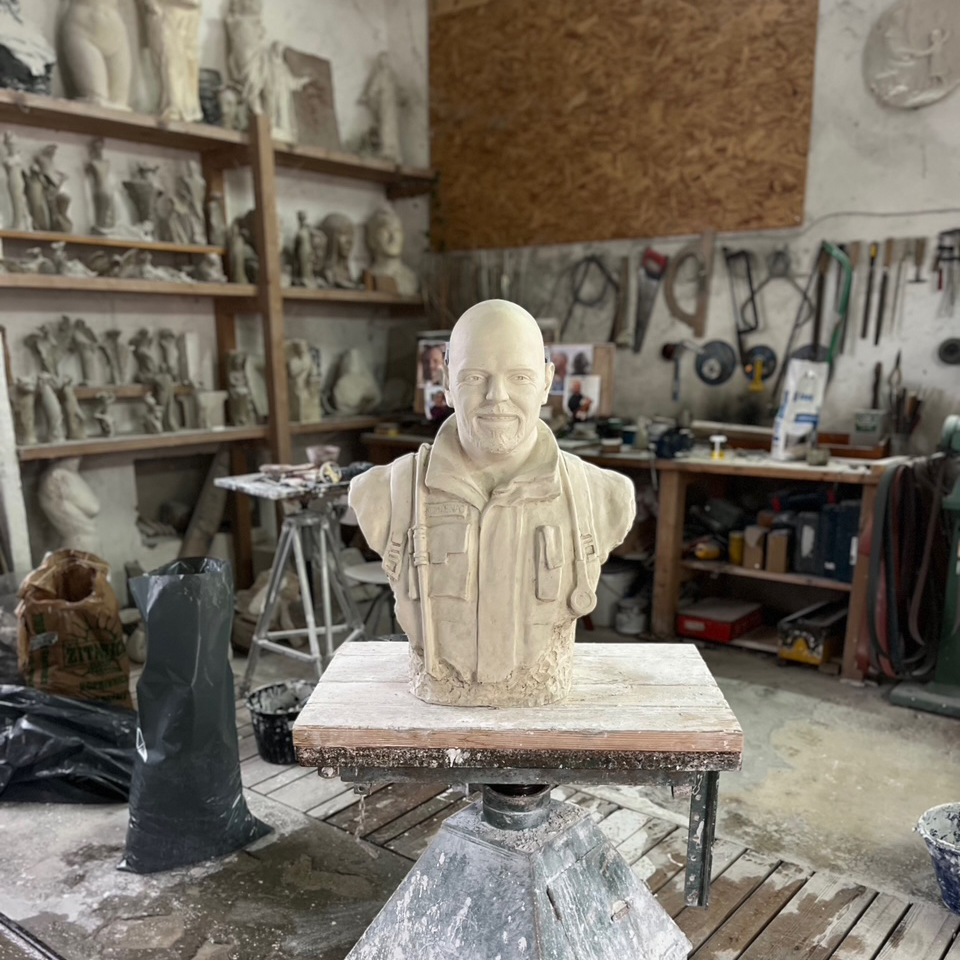
The process of creating a portrait for a monument begins with modelling in clay. At this stage, the character of the face, expression, and proportions are defined. Modelling requires precision, experience, and a deep understanding of the personality being portrayed. Once the client is fully satisfied with the result, a plaster negative of the clay figure is made. From this negative, a plaster positive is produced. This plaster model becomes the basis for the subsequent carving of the stone sculpture.
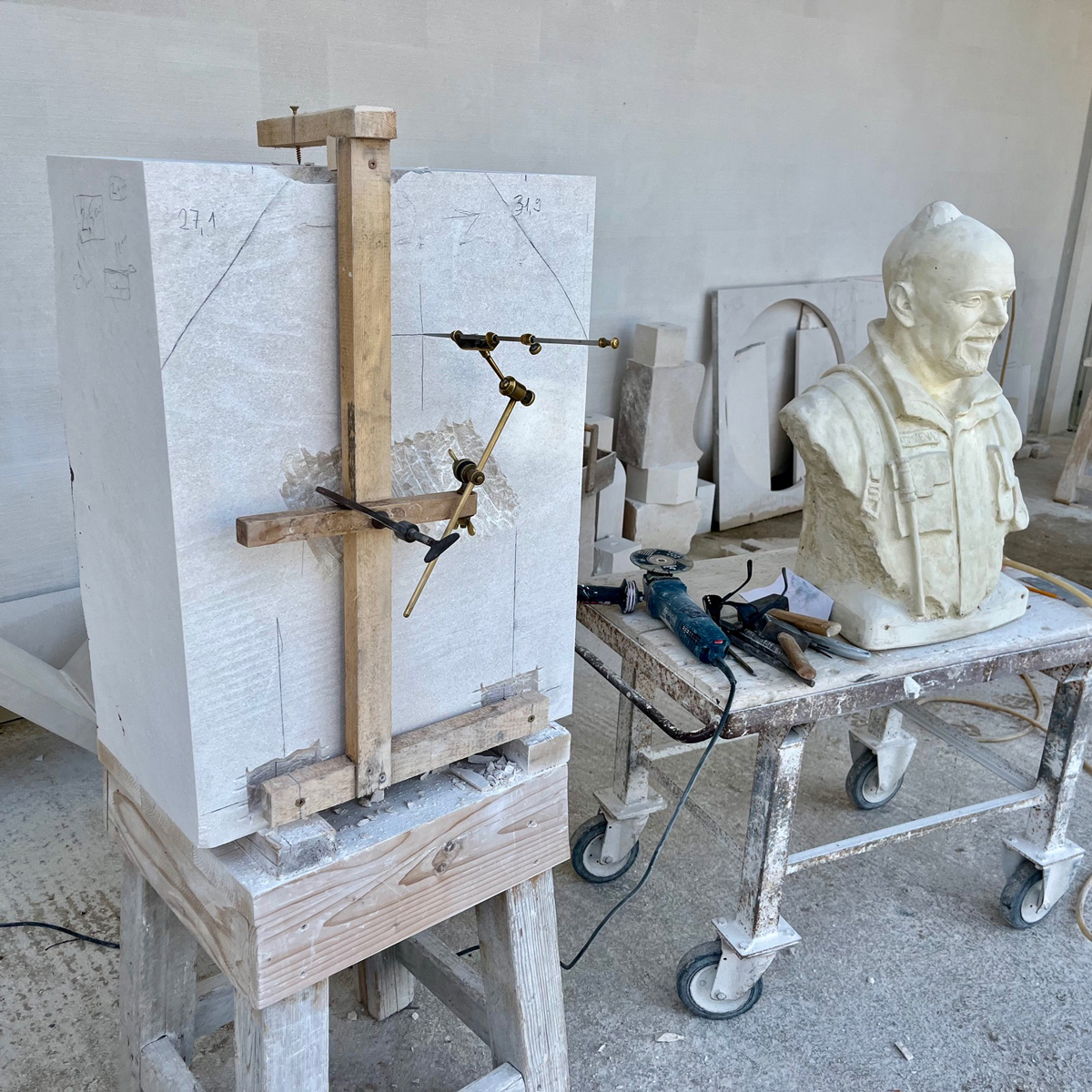
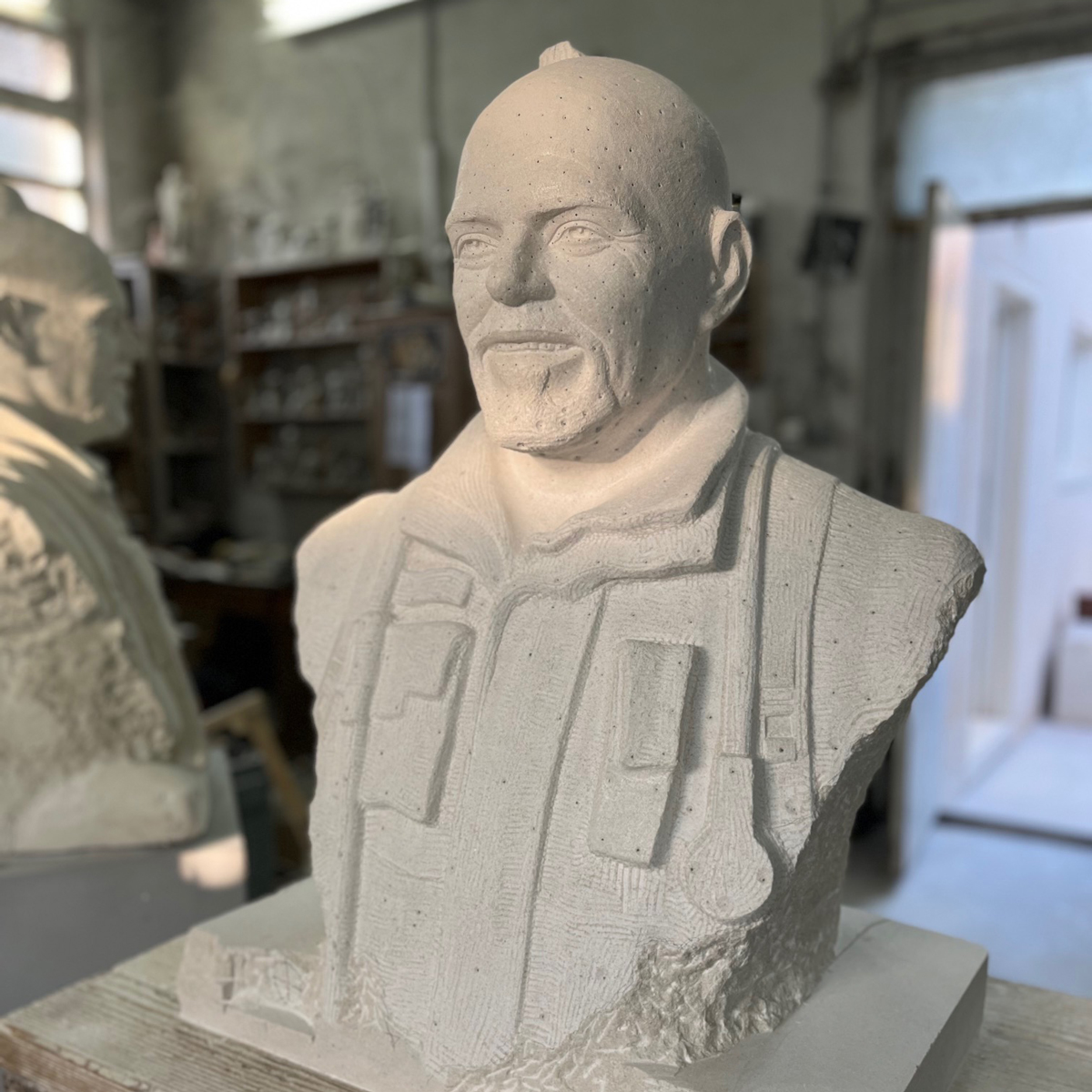
The modelling process and the production of plaster casts take place in the sculptor’s studio, where the final expression of the portrait is refined. The actual carving of the stone portrait is carried out in our workshop in Donji Humac on the island of Brač. There, in an environment with a long stonemasonry tradition, the demanding phase of pointing begins. Pointing is a classical sculptural technique in which measurements from the plaster model are precisely transferred into stone. Every detail must be accurate. Every intervention carefully considered.
The monument is carved from first-class white Brač stone. This stone is renowned for its durability, fine structure, and exceptional suitability for portrait sculpture. For this reason, it has been used for centuries in public monuments and stone busts.
Lovre Jakšić has extensive experience in creating stone portraits. Whether for private commissions, such as portraits for graves, or for public monuments. Among his notable works are the monument to Jean-Michel Nicolier in Vukovar, the monument to Mario Puratić in Sumartin, portraits of the first Croatian President Franjo Tuđman in Nerežišća and in Australia, as well as many other public and memorial projects.
A stone portrait is not merely a sculpture. It is a lasting record in material that outlives time. The monument to Goran Komlenac is precisely such an example. A union of respect, expertise, and stone as a bearer of memory.
